
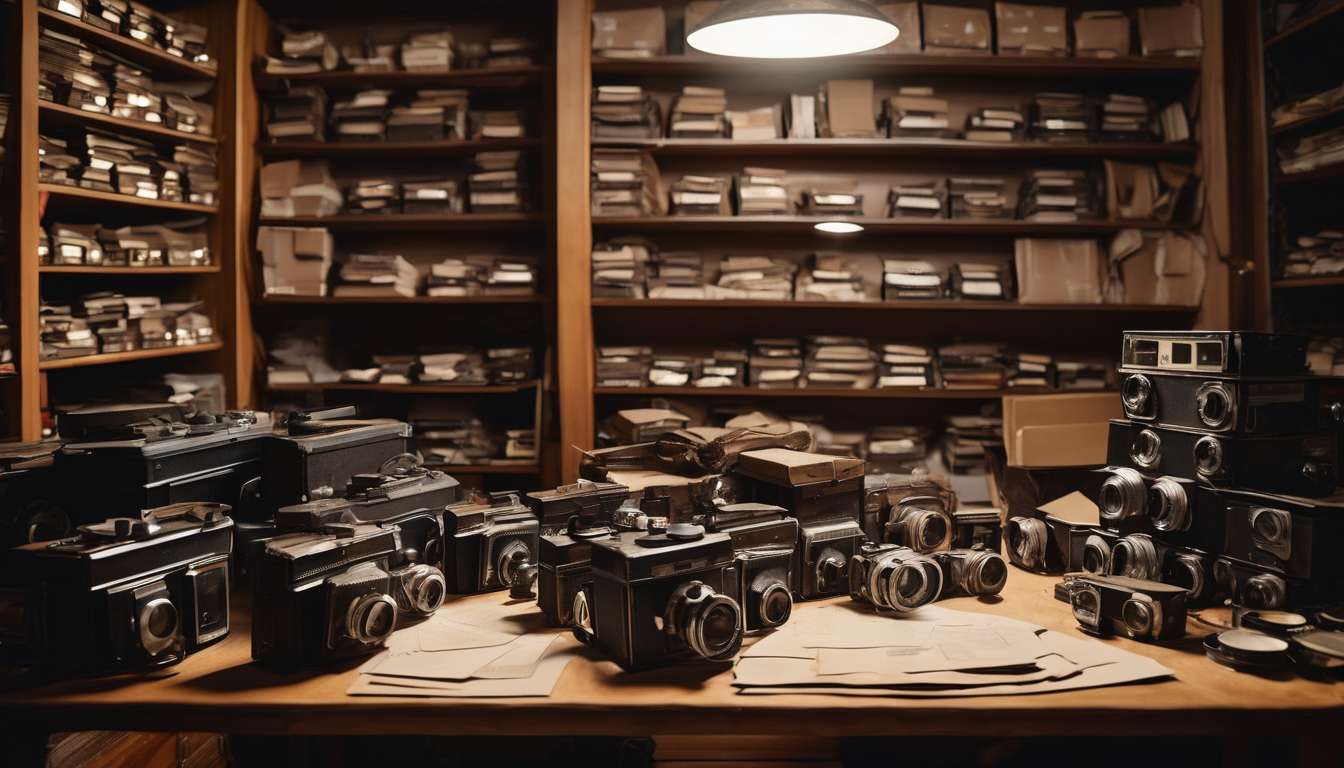
The absence of comprehensive records leaves us navigating a fragmented history of adult photography media.
We see archives that prioritize mainstream art and film while sidelining materials deemed morally or legally contentious, creating gaps that distort our understanding of visual culture.
We confront legal barriers, privacy concerns, and institutional reluctance that limit what can be preserved and accessed; yet these constraints also shape which narratives endure.
We argue that acknowledging those omissions is the first step toward reconstructing a fuller, more honest cultural memory.
We collaborate with collectors, scholars, and communities to document production, distribution, and reception practices that have influenced aesthetics, technology, and social norms.
We balance ethical stewardship with the imperative to safeguard materials for research, contextualizing them without sensationalizing.
We aim to map how censorship, commercialization, and shifting sexual politics intersected with photographic practice, so future generations can study this complex terrain with nuance rather than assumption.
Historical Gaps and Silences
We often find that large swaths of adult photography history are missing or deliberately obscured, leaving gaps that skew our understanding of cultural and technological change.
Archival preservation has been inconsistent: institutions prioritized conventional art while adult material was relegated to basements, personal attics, or destroyed to avoid scandal. That neglect fractures collective memory and isolates researchers and communities seeking context.
Censorship, legality, and moral panic shaped what survived: laws, prosecutions, and public pressure prompted deliberate purges, often erasing entire regional practices. This creates an uneven record where what’s accessible reflects power more than practice.
Private collections hold crucial counter-narratives but are vulnerable: they’re dispersed, secretive, and at risk from loss or sale.
Actions to address the gaps:
- Share resources and build trust among collectors, researchers, and institutions.
- Advocate for inclusive repositories and preservation policies.
- Create collaborative projects that document dispersed materials and contextualize them.
Outcomes:
- Stronger sense of belonging for communities connected to this history.
- A fuller, more honest archive that better represents cultural and technological change.
Legal and Ethical Constraints
We must navigate complex legal restrictions and ethical responsibilities that shape what can be collected, preserved, and shared.
We acknowledge that archival preservation isn’t neutral: we balance the duty to document with laws around obscenity, consent, and minors. We’re committed to frameworks that respect creators, subjects, and communities who want safe, dignified treatment of materials.
We confront censorship and legality concerns transparently.
- We consult counsel and ethics boards to determine access levels, redaction needs, and provenance verification.
- We prioritize informed consent records and clear usage policies so contributors and researchers feel secure belonging to a responsible archive.
- When materials raise legal or moral questions, we document decisions and rationale to maintain trust.
We recognize private collections may intersect with public responsibilities.
- We set standards for acquisition, chain of custody, and restricted access when necessary.
- We work collectively and openly so preservation, accountability, and community values guide what survives for future study.
Private Collections’ Role
Many collectors have preserved unique prints, ephemera, and oral histories that institutions never acquired.
We rely on their cooperation to fill gaps in the public record.
Private collections are community-held resources that sustain archival preservation when public bodies hesitate.
We invite collectors to share provenance notes, condition reports, and contextual stories so materials can be documented responsibly and accessed ethically.
We acknowledge censorship and legality concerns.
- Collectors and archivists must navigate obscenity laws, consent, and privacy.
- Advocacy for historical value should be balanced with legal and ethical obligations.
By forming networks, we create trusted channels for digitization, safe storage, and controlled access.
- These channels should respect both donors and researchers.
- Transparent agreements should specify use limits and deaccession terms, building confidence between owners and institutions.
When we work together, private collections become living parts of a collective heritage rather than hidden troves.
Our shared stewardship affirms belonging, ensures accountability, and helps preserve a more complete, nuanced history of adult photography for future communities.
Institutional Reluctance Factors
Many institutions hesitate to acquire or exhibit adult photography because of legal risks, funding pressures, donor sensitivities, and concerns about public backlash.
We recognize these fears and want to build communities that feel safe addressing them.
Institutional reluctance often stems from worries about censorship and legality.
- Ambiguous statutes or precedent can chill acquisitions despite their cultural value.
- Boards and funders may react conservatively, leaving curators isolated when they propose materials that challenge mainstream norms.
Responsibility for archival preservation sometimes shifts to private collections, which affects access.
- Items may survive but remain inaccessible to wider publics.
- That concentration fuels anxiety about reputation and liability, so institutions default to avoidance.
As colleagues committed to inclusive historical records, we need to acknowledge structural pressures without excusing inaction.
- By naming how censorship and legality concerns, funding dynamics, and reliance on private collections shape choices, we create a shared understanding.
- That shared understanding invites cautious, intentional conversations about stewardship.
Preservation and Access Strategies
We’ll develop clear, practical strategies that ensure fragile adult photography materials are stabilized, documented, and made responsibly accessible to researchers and the public.
We prioritize archival preservation through condition surveys, climate-controlled storage, and digitization workflows so items survive and communities can rely on their continuity.
- Conduct systematic condition surveys to identify stabilization needs and prioritize interventive conservation.
- Provide climate-controlled storage (stable temperature/humidity, appropriate enclosures) and handling protocols for photographic paper, negatives, and mixed-media items.
- Establish digitization workflows with recommended capture standards, file formats, and preservation masters to reduce handling of originals.
We’ll create access policies that respect privacy, consent, and the realities of censorship and legality, balancing openness with legal obligations and community care.
- Draft tiered access levels (open access, restricted access, mediated access) tied to consent documentation, legal risk, and community sensitivity.
- Implement a review process for requests that involve potentially identifiable individuals, minors, or sensitive content.
- Include procedures to respond to takedown, legal orders, and censorship pressures while documenting decisions and appeals.
We’ll welcome private collections into collaborative pipelines, offering intake guidelines, provenance documentation, and options for long-term stewardship that honor donors and creators.
- Provide clear intake forms and checklists for private collectors, covering provenance, chain of custody, consent statements, and existing rights.
- Offer flexible stewardship options: full accession, custodial deposits, or digital copies with agreements specifying access and stewardship responsibilities.
- Maintain provenance and donor files to preserve creator and ownership histories.
We’ll standardize metadata and rights statements so everyone — researchers, artists, and community members — knows what can be used, by whom, and why.
- Adopt consistent metadata schemas (administrative, descriptive, technical, rights) and controlled vocabularies appropriate to adult photography collections.
- Include explicit rights statements and access notes with each item or collection (e.g., copyright status, donor restrictions, consent limitations).
- Make machine-readable rights/usage metadata available alongside public records to facilitate responsible reuse.
We’ll train staff and volunteers in trauma-informed handling and nondiscriminatory service, building trust with collectors and audiences who’ve been marginalized.
- Provide regular training sessions on trauma-informed engagement, implicit bias, confidentiality, and de-escalation techniques.
- Establish support and reporting structures for staff who encounter distressing materials or disclosures from donors/researchers.
- Create community-informed intake and access practices that respect cultural differences and marginalization.
We’ll regularly review policies with stakeholders, ensuring our practices adapt to legal changes and community needs, and we’ll publish transparent reporting so our work stays accountable and inclusive.
- Convene periodic stakeholder reviews (community members, legal counsel, archivists, creators) to evaluate policy effectiveness.
- Update policies in response to legal developments, technological changes, and community feedback.
- Publish transparent reports on access decisions, takedown requests, and stewardship outcomes to promote accountability and trust.
Contextualization Practices
We provide clear historical, cultural, and ethical context for adult photography materials so researchers and the public can interpret images responsibly and understand their production, circulation, and impact.
We frame items within the social norms, technologies, and communities that shaped them, and we link holdings to related archival preservation practices so provenance and condition are transparent.
We explain how private collections entered institutional care and note the voices of contributors, models, and audiences to counter erasure and foster trust.
We acknowledge censorship and legality as factors that affected what was created, collected, or destroyed, and we document legal restrictions and contestations without repeating debates best reserved for policy analysis.
We use interpretive labels, detailed metadata, and curated exhibits to situate images ethically and historically, inviting community input and shared stewardship.
By centering inclusion and consent, we help people from diverse backgrounds see themselves in the archive and participate in ongoing documentation and interpretation.
Censorship and Commercial Forces
We examine how moral panics, obscenity laws, market pressures, and distribution networks shaped what adult photography makers could produce, how materials were sold or suppressed, and whose work survived for future study.
Censorship and legality forced creators and distributors to adapt.
- Self-censorship: Producers altered or removed content to avoid prosecution.
- Market shifts: Creators moved to safer or less visible markets.
- Discrete channels: Reliance on mail order, private clubs, and underground networks to distribute material.
Economic incentives and market forces reorganized the field.
- Mainstream retreat: Large publishers avoided riskier work to protect profits and reputations.
- Niche persistence: Specialist demand sustained underground scenes and small presses.
- Survival of records: Much of the underground output survived in private collections rather than public archives.
Archival preservation is inherently political.
- Selection reflects risk and viability: Choices about what to collect, store, or destroy are driven by legal risk assessments and commercial considerations.
- Marginalized makers erased: Raids, bans, and market exclusion disproportionately removed traces of certain creators and communities.
We confront tensions between protection and access.
- Protecting materials to avoid legal jeopardy and safeguard contributors.
- Making materials accessible so researchers and the public can learn from them.
Practical strategies to balance protection and access.
- Anonymized catalogs that reduce identifying information while documenting holdings.
- Conditional access agreements that limit who can view sensitive items and for what purposes.
- Partnerships with sympathetic repositories that understand legal risks and ethical concerns.
By sharing these strategies and building trust, we aim to recover erased work and ensure materials contribute to collective understanding rather than remaining hidden or lost.
Toward Inclusive Cataloging
To build more representative records, we must rethink cataloging practices so they document diverse creators, contexts, and formats rather than reproducing past exclusions.
We commit to descriptive language that:
- Respects subjects and makers.
- Avoids stigmatizing labels.
- Records provenance clearly so items from private collections are traceable without exposing owners to harm.
We’ll adopt inclusive metadata schemas that capture:
- Gender, race, and regional origin.
- Noncommercial contexts.
- Changes in censorship and legality over time so researchers can interpret materials within shifting legal frameworks.
We’ll prioritize archival preservation practices that acknowledge nonstandard formats and ephemera.
We’ll create access policies that balance openness with ethical concerns.
We’ll invite community contributors to review and enrich records by:
- Providing pathways for collaborative cataloging.
- Enabling redress where records have erased participation.
By centering care, consent, and transparency, we’ll build catalogs that foster belonging, support research, and resist reproducing historical silences.
How do cultural archives balance donor privacy with researchers’ needs when personal correspondence or diaries accompany adult photography collections?
Archives balance donor privacy with researchers’ needs by negotiating access terms with donors and communities.
Key practices include informed consent and clear donation agreements.
- These outline what materials may be accessed, any restrictions, and the donor’s expectations.
- Agreements can specify embargo periods, restricted use, or required permissions for publication.
Embargoes and tiered access levels protect sensitive material while allowing future research.
- Embargoes delay access for a set time to protect privacy or safety.
- Tiered access assigns different levels (open, restricted, mediated) based on sensitivity.
Redaction, anonymization, and mediated research allow use without exposing private details.
- Redaction removes identifying details before release.
- Anonymization replaces names or unique identifiers so content remains useful.
- Mediated research lets an archivist review materials and provide summaries or extracts to researchers under supervision.
Restricted-use agreements and ongoing consultation build trust with communities.
- Agreements can require researchers to follow conditions (e.g., no press release, limits on copying).
- Ongoing consultation with donors or community representatives helps address cultural sensitivities and evolving concerns.
Together, these measures — informed consent, embargoes, tiered access, redaction/anonymization, mediated access, and clear legal agreements — balance donor privacy with researchers’ needs, ensuring both trust and scholarly inquiry are sustained.
What standards exist (or are being developed) for digitizing and describing explicit materials to ensure long-term usability across changing file formats and software?
We’re asking which standards guide digitizing and describing explicit materials to keep them usable as formats change.
We’re adopting open, nonproprietary formats such as TIFF, JPEG2000, and PDF/A to maximize long-term readability and avoid vendor lock-in.
We’re embedding rich metadata using standards like PREMIS, Dublin Core, and METS to document provenance, rights, and technical details.
We’re applying controlled vocabularies while recording access restrictions.
We’re protecting integrity and accessibility over time by using:
- checksums for fixity
- migration plans to move data to newer formats when needed
- software emulation strategies to recreate original execution environments
We’ll collaborate with peers to update policies and share tools so everyone’s work stays accessible and respected.
How do archives assess the provenance and authenticity of adult photographs when dealing with anonymous or pseudonymous creators?
When creators are anonymous or pseudonymous, we gather multiple kinds of evidence to assess authenticity.
- We collect contextual evidence, such as surrounding text, publication context, and related materials.
- We gather technical metadata, like timestamps, file formats, and embedded identifiers.
- We trace provenance chains, including ownership history and custody records.
We compare and corroborate different records and consult specialists.
- We examine paper trails and acquisition records and compare them with related items.
- We consult experts (curators, historians, external specialists) to interpret evidence.
- We use forensic tools for file and image analysis to detect manipulation or inconsistencies.
We document uncertainty, apply consistent attribution practices, and involve the community.
- We document uncertainties transparently, noting where evidence is incomplete or ambiguous.
- We apply consistent attribution practices, using clear criteria for labeling and crediting items.
- We involve community contributors and stakeholders so preservation efforts are inclusive and collaboratively managed.
Conclusion
You’ve seen how historical gaps, legal limits, and institutional reluctance have obscured adult photography’s media history.
Private collectors and community archives often fill those silences, but they face censorship, ethical dilemmas, and preservation challenges.
You’ll need inclusive cataloging, clear access policies, and contextual practices that respect subjects and audiences while resisting commercial pressures.
By balancing legal care with open-minded stewardship, you can help build archives that document this material responsibly and comprehensively for future research.